Key Takeaways:
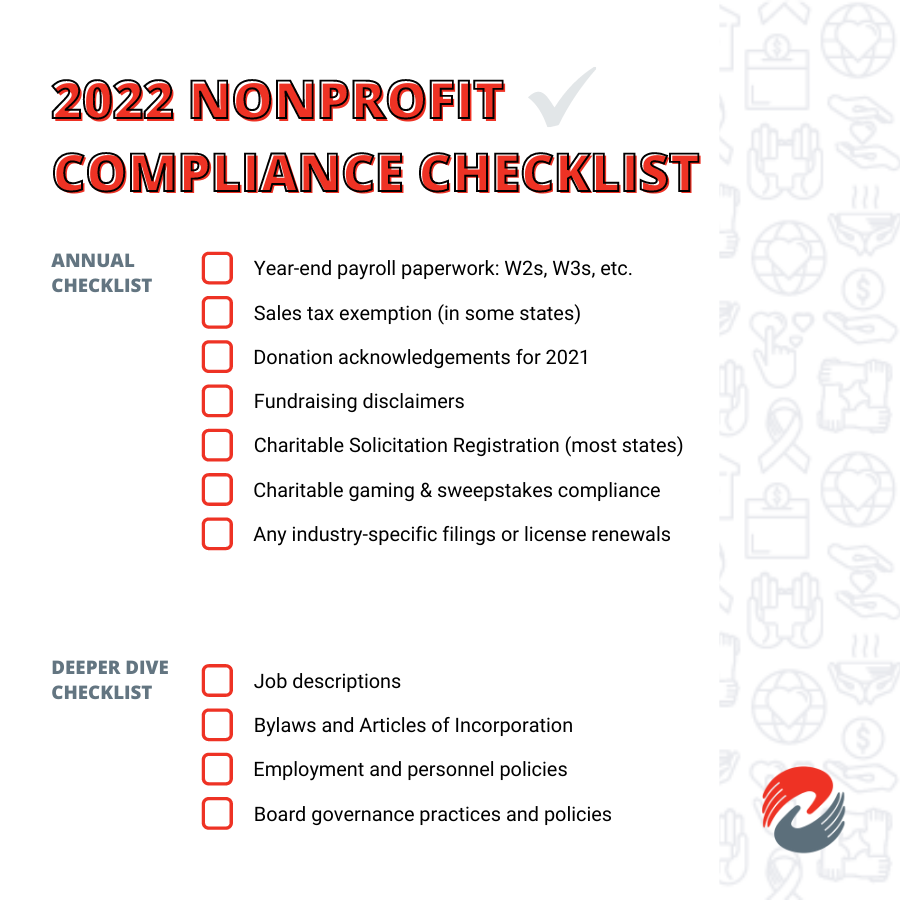
- Keeping your 501(c)(3) status active requires annual compliance, especially filing the correct IRS Form 990 on time. Repeated late filing can still lead to revocation.
- Federal tax-exempt status does not automatically apply at the state level. States may require annual reports, separate tax exemption steps, and additional filings.
- Charitable Solicitation Registration (CSR) is often required to legally fundraise, and fundraising includes online asks, social posts, emails, texts, and donation campaigns.
- If your status is revoked, reinstatement is common and fixable. Most cases are caused by leadership turnover or real-life disruptions, not bad intent.
- Reinstatement typically falls into two paths: retroactive reinstatement (no gap but requires back-filing missing 990s) or postmark reinstatement (simpler, but shows a gap in exempt status).
Many nonprofit leaders assume that once the IRS approves 501(c)(3) status, the legal part is basically done. It isn’t.
One of the most common and costly misunderstandings is thinking that federal tax-exempt status means you’re exempt from everything, everywhere. In reality, IRS recognition is only one layer of compliance. States have their own rules, reporting systems, and fundraising registration requirements. And if annual filings are missed or consistently late, the IRS can revoke your status automatically.
In this episode of 501c Suite, Olivia Cloer of Charitable Allies is joined by Grace Gerding from the compliance team to break down what nonprofit leaders need to do to stay in good standing, and what options exist if the IRS has already revoked your tax-exempt status.
The Misconception That Gets Nonprofits in Trouble
Misconception: “If we filed with the IRS, we don’t have to pay taxes of any kind.”
Grace explains that IRS recognition only applies at the federal level. States are independent, and many require separate applications to receive state tax exemptions, plus additional annual filings to remain active.
It’s also important to understand that a 501(c)(3) determination letter does not make a nonprofit exempt from all taxes. For example, if your organization has employees, you are still responsible for employer-side payroll taxes, including Social Security and Medicare. Federal tax-exempt status does not eliminate those obligations.
The state layer can include:
- State tax exemption processes (sales tax, property tax, or other state-specific exemptions)
- Annual reports to keep the nonprofit in good standing
- Charitable solicitation registration (CSR) to legally fundraise
In other words: federal approval is not the finish line. It’s the starting structure.
The IRS Requirement That Protects Your Status
To keep 501(c)(3) status active federally, the core requirement is simple:
File your Form 990 every year, on time, and in the correct version.
Grace breaks down the main Form 990 types nonprofit leaders should know:
Form 990-N (e-Postcard)
Typically, for organizations with $50,000 or less in annual revenue. It’s very short, more like a basic statement of continued operation.
Form 990-EZ
Often used when annual revenue is over $50,000 but under $200,000, and total assets are under $500,000. This starts to include more financial detail, which is why many leaders bring in accounting support.
Form 990 (Full)
Generally required if annual revenue is $200,000 or more, or total assets are $500,000 or more.
Form 990-PF
Required for private foundations, regardless of size.
Form 990-T
Required if the nonprofit has more than $1,000 in unrelated business income (UBIT). It’s less common, but important to know it exists.
Your deadline matters more than many leaders realize
For many nonprofits operating on a calendar fiscal year, the most common deadline is May 15 (five months and fifteen days after the fiscal year ends). If your fiscal year is different, your due date shifts accordingly.
Grace also shares a practical tip nonprofit leaders often overlook: your fiscal year end should be stated in your bylaws, and it should align with how your organization keeps its books.
The Big Three of Nonprofit Compliance
-
File your federal 990 correctly and on time
Repeated late filings can eventually lead to revocation.
-
File your state annual report
Most states require a simple annual report confirming that your organization is still active. Requirements vary widely.
-
Register before fundraising (CSR)
Charitable Solicitation Registration (CSR) is often separate from incorporation and IRS approval. It is the legal authorization to solicit donations in many states.
And fundraising is broader than many leaders realize. If you are:
- Posting donation links on social media
- Emailing or texting supporters for gifts
- Running online campaigns
- Asking individuals for contributions
You are fundraising.
Online fundraising introduces complexity because donors can give from anywhere. A reasonable starting point for newer organizations is to register in your home state and expand registration as fundraising activity grows.
Can You Be Revoked for Filing One Day Late?
Yes.
Olivia asks whether filing a 990 one day late, three years in a row, could still result in revocation.
Grace confirms: true.
Consistently late filing can trigger automatic revocation, even if you technically filed every year.
The lesson? Know your fiscal year. Know your deadline. Build reminders and processes so compliance doesn’t rely on memory.
If You’ve Been Revoked
Revocation happens more often than most leaders realize. It affects tens of thousands of organizations each year.
Grace identifies two common patterns:
Leadership turnover
Board transitions and role changes can cause required filings to fall through the cracks.
Personal circumstances
Illness, caregiving, or major life disruptions can pause operations and shift priorities away from paperwork.
The important takeaway: revocation is common, and there is a path back to good standing.
Two Paths to Reinstatement
If your status has been revoked, you typically have two reinstatement options.
Postmark Reinstatement
Often used when:
- The organization has been dormant for years
- Financial records are incomplete
- Back-filing missing 990s is not realistic
With postmark reinstatement, there will be a visible gap in exempt status between the revocation date and the reinstatement filing.
That gap may matter if:
- You received significant donations during that period
- Grantmakers require continuous compliance
For organizations that were largely inactive during the revoked period, this option can be practical and efficient.
Retroactive Reinstatement
Retroactive reinstatement restores exempt status back to the original date, eliminating any gap.
However, it typically requires:
- Filing all missing 990s
- Producing historical financial information
This option is often preferred when the organization remains active, receives donations, or needs continuous status for grant eligibility.
Many organizations attempt retroactive reinstatement first and shift to postmark only if documentation makes retroactive reinstatement impossible.
Which IRS Form Is Used for Reinstatement?
To reinstate, you generally file the same application used for initial recognition:
Form 1023-EZ
Available if you qualify: under $50,000 in revenue and under $250,000 in assets, and not in certain excluded categories like schools, hospitals, churches, or political organizations.
Full Form 1023
Required if you do not qualify for the EZ or fall into an excluded category.
The filing fees are:
- 1023-EZ: $275
- Full 1023: $600
No one loves paying the IRS hundreds of dollars just to file a form, which is one reason understanding your eligibility and timelines matters.
The 15-Month Rule
If you are pursuing retroactive reinstatement and would otherwise qualify for the 1023-EZ, you generally must file within 15 months of the IRS revocation date.
If you miss that window, you may be required to submit the full 1023 for retroactive reinstatement, even if your organization is small.
Postmark reinstatement does not have the same 15-month limitation for EZ eligibility, provided you otherwise qualify.
This is one reason timely action matters once revocation occurs.
Final Encouragement
Compliance is not glamorous. It is also not optional.
Filing your 990 correctly, maintaining state good standing, and registering properly for fundraising protects your ability to accept donations, pursue grants, and operate with credibility.
And if your status has already been revoked, you are not out of options.
Reinstatement is common. The IRS has a process because it happens frequently. With the right approach, most organizations can regain good standing and continue their work.
Learn More and Stay Connected
If you’re looking for reliable answers to your nonprofit’s most important legal questions, visit charitableallies.org for free resources, guides, and case studies designed to support nonprofit sustainability.
Subscribe to 501c Suite so you never miss an episode, and share it with a fellow nonprofit leader or board member who could use a trusted legal ally.