Sponsored By Barnes Dennig
For a nonprofit, every dollar and every hour matters. As the organization grows, handling compensation, benefits, and HR compliance can become more and more complex, stretching leaders thin.
Many nonprofits reach a point where they need experienced HR services, but don’t have the budget or the workload to hire a full-time HR executive. Others have an existing HR team that needs additional, specialized support.
Fractional HR offers a flexible solution, providing experienced strategic guidance and hands-on operational support tailored to the nonprofit’s needs and resources. Beyond filling gaps in staffing, fractional HR can deliver meaningful financial and operational returns by improving workforce stability, strengthening compensation and benefits practices, reducing risk, and allowing nonprofit leaders to focus on their mission.
Is Fractional HR Worth it?
When evaluating fractional HR support, you might wonder if the investment is worth it for your organization. Comparing the cost to that of hiring HR in-house is an important piece of the puzzle, but it isn’t the entire picture.
A more meaningful question is: What are our current workforce challenges already costing the organization?
These costs aren’t always obvious or reflected as individual line items in a budget. They hide in the shadows, zapping time and energy away from your core mission. They can include:
- Executive Director time spent managing routine employee matters (benefits, hiring, etc)
- Frequent employee turnover
- Loss of institutional knowledge, leading to inefficiencies and issues
- Constant time, energy, and resources spent recruiting and hiring
- Inconsistent compensation and performance management (Annual reviews for some or no staff)
- Inefficient onboarding and benefits administration
- Compliance gaps and potential employment-related risks
- Administrative processes that require repeated attention or rework
If your nonprofit has one of these issues, it likely won’t sink the organization. But collectively, they pull time and money away from the core mission and can create an unhealthy work environment.
No HR support creates problems that snowball into larger, more expensive headaches. But a full-time hire isn’t right for every gap. Fractional HR is the happy medium that can relieve the pressure without breaking the bank.
How can Fractional HR help with Compensation?
It’s no surprise that paying people a reasonable amount for their work is a crucial piece of recruiting and retaining great employees. But how large is the issue?
67% of nonprofit employees said they were actively looking for a new job, or would be within the next year, according to a Candid survey done in 2024. Inadequate pay and benefits was one of the top reasons cited by employees.
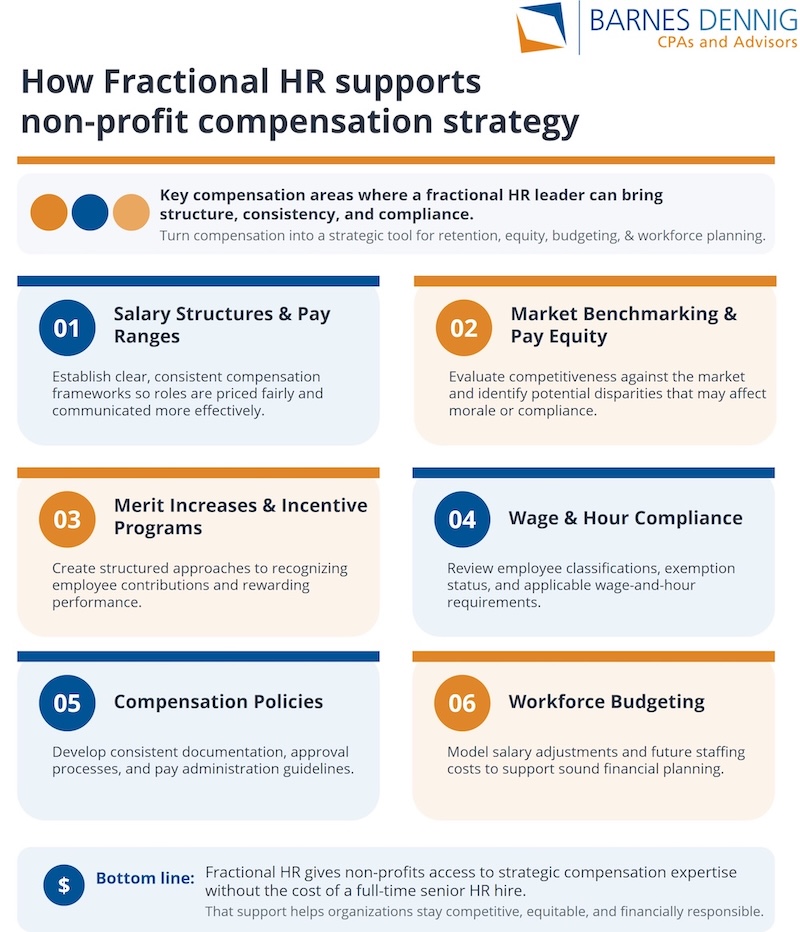
Fractional HR professionals can help nonprofits develop and maintain compensation programs that balance financial realities with workforce needs, including:
- Salary structures and pay ranges: Establishing clear, consistent compensation frameworks
- Market benchmarking and pay equity: Evaluating competitiveness and identifying potential disparities
- Merit increases and incentive programs: Developing structured approaches to recognizing employee contributions
- Wage and hour compliance: Reviewing employee classifications and applicable requirements
- Compensation policies: Creating consistent documentation and approval processes
- Workforce budgeting: Modeling salary adjustments and future staffing costs
These practices can improve transparency, strengthen employee trust, and help nonprofit leaders make informed compensation decisions.
Can Fractional HR Actually Save your Nonprofit Money and Reduce Turnover?
In the long run, a more strategic approach can actually reduce your costs by reducing turnover. Gallup estimates that turnover costs 50-200% of the employee’s annual salary. For small and mid-sized nonprofits, those costs add up quickly.
For example, if you hire a social worker at $60,000 annually, that person leaving is likely to cost $30,000-$120,000 in costs like staff time spent interviewing,onboarding, any hiring costs like drug tests or background tests, and loss of productivity while the new person ramps up.
One of the goals of outsourced HR is to reduce the turnover rate by making your processes better without drawing attention away from your core mission. Often this support looks like:
- Recruiting, including assistance choosing employees that are the right fit
- Onboarding, developing, and training employees, improving performance and retention
- Training managers to ensure those managing others have the skills to help their people succeed
- Planning compensation and benefits
- Creating employee engagement and performance monitoring processes
The goal isn’t simply to fill vacancies faster. It’s to build a team capable of advancing the organization’s mission over the long term.
What are the Potential Risks?
What’s the actual risk of getting HR wrong? The big bad wolf of HR is the wrongful termination lawsuit. They’re expensive to deal with, whether you’re in the right or not. But getting it wrong can be significantly more expensive.
The other risk is regulatory bodies imposing fines, backtaxes, or even revoking tax exempt status if there are policies and actions going against rules for nonprofits. Long story short: the shortcut may actually end up costing you.
Having someone experienced in HR, whether it’s in-house or outsourced, can identify where your gaps are and fill them in before something happens. An ounce of prevention is worth a pound of cure.
Most frequently, HR support will analyze and help with:
- Employment policies and documentation standards
- Manager guidance and employee relations practices
- Wage and hour classifications
- Leave and accommodation processes
- Multi-state employment requirements
- Benefits administration and compliance procedures
They can also assist with payroll coordination, employee enrollment changes, compensation documentation, open enrollment, and vendor management. Keeping your HR ducks in a row is valuable, both to avoid penalties and lawsuits, and to improve employee’s day-to-day experience.
No HR strategy eliminates employment risk entirely, but proactive oversight can help nonprofits manage issues before they escalate.
How Can We Measure the Return of an HR Vendor?
While the value of stronger HR leadership can’t be measured entirely in dollars, the benefit (pardon the pun) of HR support is usually pretty apparent.
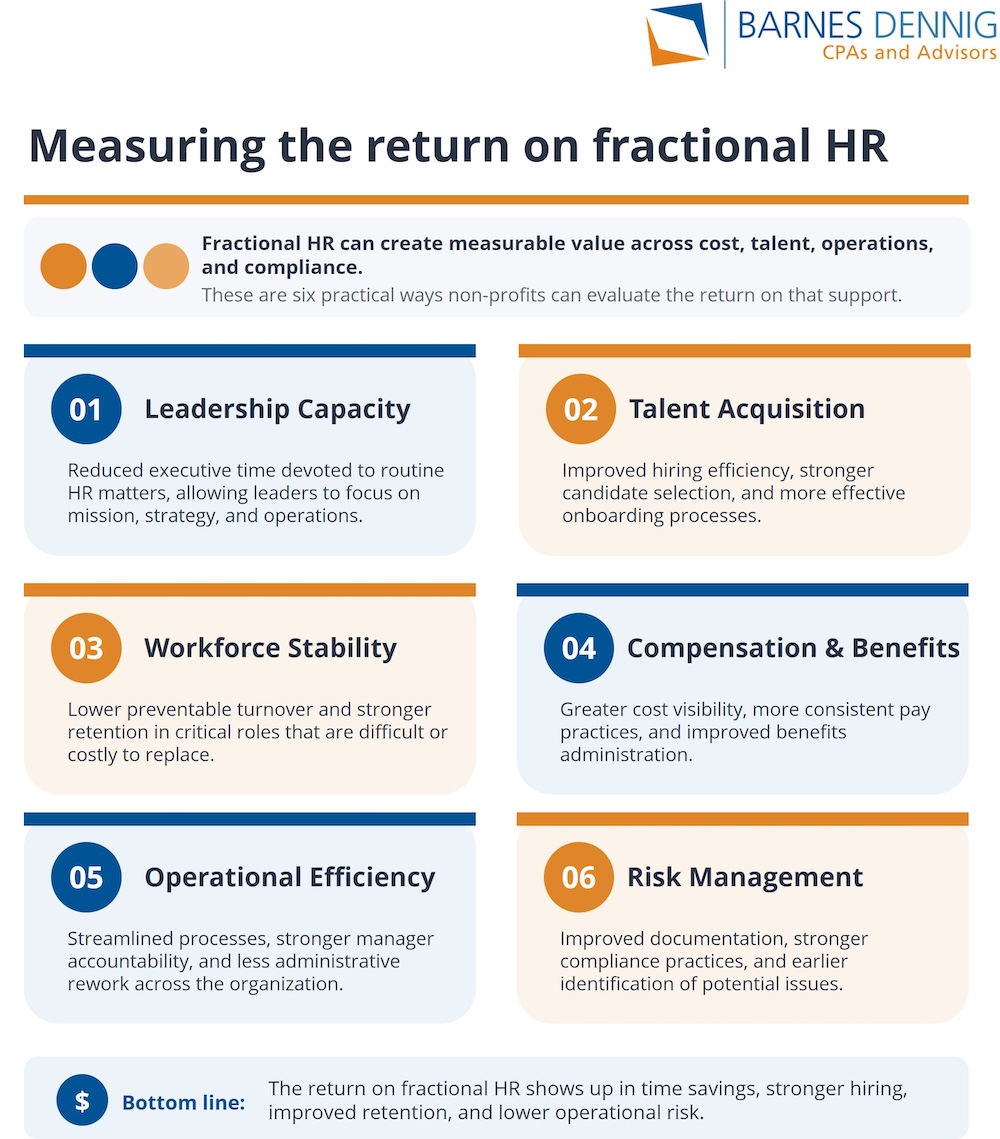
Here are a few signs you have a great HR partner on board:
- Leadership capacity: Less of the Executive Director’s time is devoted to routine HR matters like annual benefits renewals and employee handbooks
- Talent acquisition: Better and quicker selection and onboarding of new employees
- Workforce stability: Lower preventable turnover and stronger retention in critical roles
- Compensation and benefits: Greater cost visibility, consistent pay practices, and improved benefits administration
- Operational efficiency: Streamlined processes, stronger manager accountability, and reduced administrative rework
- Risk management: Improved documentation, stronger compliance practices, and earlier identification of potential issues
Compensation analytics, turnover trends, benefits forecasting, and workforce cost modeling can provide additional insight into where improvements are occurring.
The key is to identify the organization’s challenges first, establish meaningful benchmarks, and evaluate how HR support is addressing them.
How Much HR Support is Right for Your Nonprofit?
Not every nonprofit needs (or can afford) a full-time HR professional. But once a nonprofit has 25-50 employees or $3-5 million in annual revenue, it’s likely time to get some HR support.
- Light Support: Nonprofits needing basic support like help with payroll, basic benefits administration and annual HR cycles. Often these organizations have fewer than 25 employees.
- Mid-Level Support: Nonprofits looking for basic support plus assistance with retention, developing policies, and employee relations. These nonprofits are usually between 25 and 75 employees.
- Full Support: For nonprofits who are in heavily regulated industries, multiple states or are experiencing significant growth, more comprehensive support can help them grow responsibly. These organizations usually have more than 75 employees.
Fractional HR allows organizations to access the expertise and capacity they need without having to facilitate another hire, whether it would be the first on the HR team or the fifth. Fractional HR support can also grow with your organization easily, without your nonprofit needing to recruit your own HR professionals.
Conclusion
For nonprofits, effective HR management is about more than policies, payroll, and benefits. It’s about creating an environment where employees can thrive, leaders can focus on organizational priorities, and limited resources are used effectively.
A Note About Our Sponsor

Barnes Dennig’s Fractional HR and Advisory Services team works alongside nonprofit leaders to strengthen compliance, improve compensation and benefits practice and build sustainable people operations. Whether a nonprofit is seeking day-to-day support or specialized compensation and benefits expertise, the team at Barnes Dennig can align your people strategy with your mission. They offer free consultations for nonprofits to explore if fractional HR is right for your organization’s needs.

- Fractional HR for Nonprofits - November 12, 2026
- New Nonprofit Compliance Basics: 990 Filings, SMART Goals, and Staying Tax-Exempt - November 9, 2026
- How Do I Start a 501c3 Nonprofit Organization? (with Video) - June 15, 2026