
Key Takeaways:
- New nonprofits often run into trouble by skipping a real community needs assessment, which can lead to duplicating services or solving the wrong problem.
- Clear SMART goals help nonprofit leaders define success, budget more accurately, and make early growth more manageable.
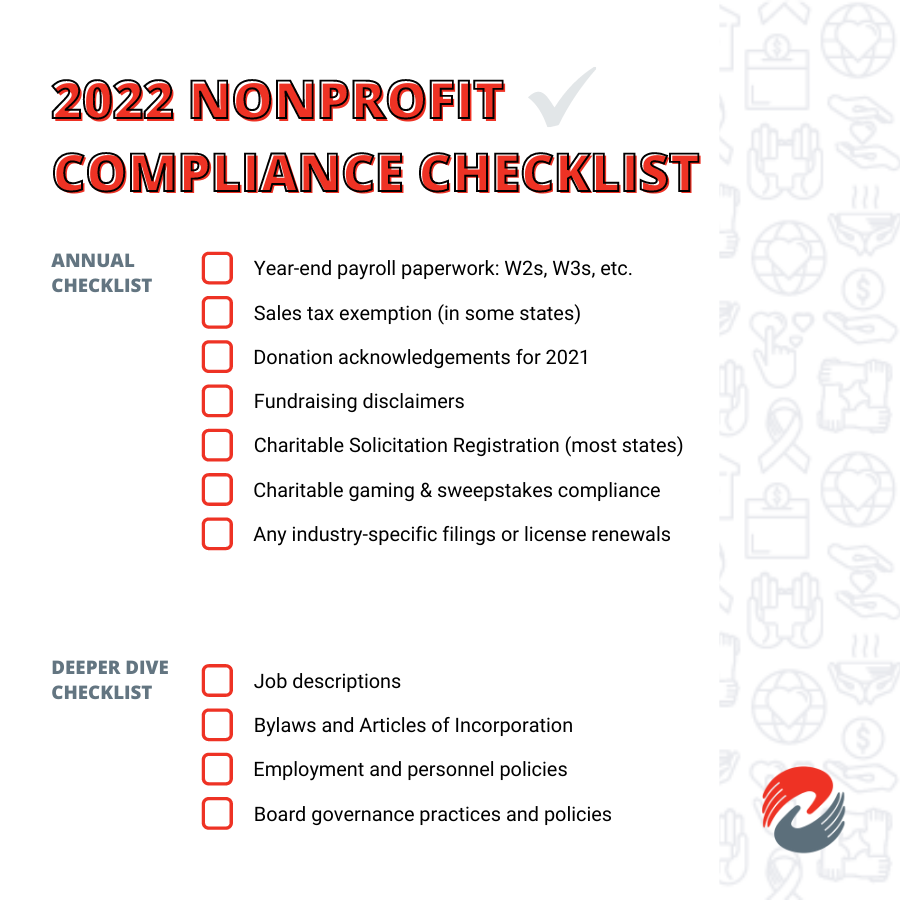
- Staying tax-exempt requires more than getting approved once. Most nonprofits must file annual Form 990 returns, maintain state filings, and monitor fundraising registration rules.
- Bookkeeping mistakes made early can create major problems later, especially when it is time to file a 990 or respond to a revocation issue.
- Simple internal controls, like shared financial oversight and documented processes, help protect the organization when staff or volunteers change.
Most nonprofit leaders do not start out trying to make legal or financial mistakes. Most are trying to help. The real problem is usually much simpler: they are building something mission-driven without fully understanding the systems required to keep it healthy.
That is what makes early nonprofit compliance so important.
In this episode of 501c Suite, Olivia Cloer is joined by Will Gay, a Nonprofit Compliance Coordinator at Charitable Allies, to walk through some of the most common mistakes new nonprofits make. Their conversation covers everything from assessing whether a nonprofit is actually needed to setting practical goals, to understanding Form 990 filing rules, fundraising registration, bookkeeping, and internal controls.
Mistake #1: Starting Without Assessing the Real Need
One of the earliest mistakes new nonprofit leaders make is assuming that because a cause matters, a new organization is automatically the best solution.
It may be. But it may not.
Before forming a nonprofit, leaders should look closely at the community they want to serve. Who is already doing similar work? Is the need underserved, or is the space already crowded? Are there existing organizations doing adjacent work that might be strong partners?
This is not just about competition; it’s about stewardship.
If twenty-five organizations are already offering the same service in a community, starting number twenty-six may not be the best use of time, money, or donor support. In some cases, volunteering with an existing organization or partnering with one may create more impact than launching a new entity from scratch.
On the other hand, if the need is specific or underserved, the research may confirm that there is room for a new program to grow.
The practical takeaway is simple: do not skip the community scan. A needs assessment helps nonprofit leaders understand the population they want to serve, the current landscape, and where their work could actually add value.
Mistake #2: Defining Success Too Vaguely
Many new nonprofits begin with a broad vision: help local children, support families, improve animal welfare, and serve the elderly. Those goals are admirable, but they are not enough on their own.
A nonprofit also needs goals that are specific enough to guide action.
That is where SMART goals come in. Olivia and Will point to the importance of making goals:
- Specific
- Measurable
- Achievable
- Relevant
- Time-bound
Instead of saying, “We want to help kids,” a nonprofit might say, “We want to provide backpacks and school supplies to 100 preschoolers before the start of the next school year.”
That kind of goal changes everything. It makes budgeting easier. It helps with fundraising. It gives the board and staff something concrete to work toward. It also creates a real milestone to celebrate when the organization reaches it.
SMART goals are especially helpful in the early years because they break a big mission into practical decisions. Once leaders know exactly who they are serving and what success looks like, they can start planning staffing, programs, fundraising targets, and expenses more realistically.
Mistake #3: Not Understanding What Compliance Requires
Many new nonprofit leaders assume that once the IRS approves their organization, the legal work is mostly done.
It is not.
Forming and maintaining a nonprofit involves several layers of compliance. Will lays out the process clearly.
First, the organization usually begins by filing articles of incorporation with the state. That creates the nonprofit corporation. After that, leaders need foundational governing documents, such as bylaws and a conflict of interest policy. Those documents help the organization operate internally and are also part of what supports a tax-exempt application.
Then comes the IRS filing process. Many charitable organizations apply for recognition through either the Form 1023-EZ or the full Form 1023, depending on eligibility.
For smaller organizations, the 1023-EZ is often the simpler and less expensive option. It currently costs less than the full application and is generally used by organizations that expect lower annual revenue and meet the IRS eligibility rules. Organizations expecting more than $50,000 in annual revenue, or those that fall into excluded categories, may need the full filing instead.
After approval, compliance becomes an ongoing responsibility.
Most nonprofits need to keep up with:
- Annual state business entity or corporate reports
- Annual IRS Form 990 filings
- Fundraising registration requirements in certain states
- Compliance with their own governing documents and acknowledgment rules
This is where many nonprofits get tripped up. They think of compliance as a one-time setup task, when it is really an ongoing maintenance responsibility.
The 990 Filing Rule New Nonprofits Cannot Ignore
The biggest compliance issue discussed in the episode is the annual Form 990 filing.
Tax-exempt does not mean filing-exempt.
Most nonprofits must file some version of the 990 every year, even if they brought in little or no money. The version depends on the organization’s revenue and structure. Smaller nonprofits may be able to file the much simpler 990-N, while larger organizations may need the EZ or full form. Private foundations typically have their own filing path.
The most important point is this: if a nonprofit fails to file for three consecutive years, its IRS tax-exempt status is automatically revoked.
That rule catches more organizations than many leaders realize.
Additionally, Form 990 is generally due five months and fifteen days after the end of the organization’s fiscal year. For many nonprofits that use a calendar year, that means a May 15 deadline.
Even if the organization had zero revenue, the filing requirement usually still applies.
That makes annual tracking and reminders essential from the very beginning.
Fundraising Can Trigger Multi-State Compliance
Another area that surprises new nonprofits is charitable solicitation registration.
In many states, a nonprofit must register before it can legally solicit donations. That includes more than formal galas or main campaigns. In practice, it can include things like:
- A donation button on the organization’s website
- Emails asking supporters to give
- Online fundraising campaigns
- Outreach to donors in other states
This gets complicated quickly because state rules vary. Some states have thresholds or exemptions. Others do not. A nonprofit operating mostly in one state may have a fairly simple filing picture. A nonprofit fundraising online across state lines may face a much more complex one.
The lesson here is not that every new nonprofit needs to register everywhere immediately. It is that leaders think intentionally about where they are fundraising and what state-level obligations may trigger.
Mistake #4: Letting Bookkeeping Get Messy
If compliance is the legal backbone of a nonprofit, bookkeeping is the operational backbone.
Messy books create problems everywhere. They make Form 990 filing harder. They make budgeting weaker. They make board oversight harder. And if the organization ever has to deal with revocation or reinstatement, missing records can make everything much more difficult.
The good news is that bookkeeping does not have to be fancy to be useful.
Will’s advice is practical: maintain a record of donations, revenue, expenses, assets, and liabilities. Even a small organization using spreadsheets should keep organized records. Many nonprofits also make life easier by tracking expenses under categories that line up with the Form 990 structure.
The more organized the books are during the year, the less stressful the filing season becomes.
Final Thoughts
New nonprofit leaders do not need to know everything on day one. But they do need to build with intention.
Assess the need before you launch. Define success clearly. Learn your compliance obligations early. File your 990 every year. Keep your books clean. And do not rely on one person to hold the whole financial system together.
Those habits may not feel exciting, but they are what protect your mission, support growth, and help your nonprofit stay sustainable over time.
Learn More and Stay Connected
If you’re looking for reliable answers to your nonprofit’s most important legal questions, visit charitableallies.org for free resources, guides, and case studies designed to support nonprofit sustainability.
Subscribe to 501c Suite so you never miss an episode, and share it with a fellow nonprofit leader or board member who could use a trusted legal ally.

CEO at Charitable Allies
As the CEO, Olivia Froedge (Cloer) leads the Charitable Allies team in serving over 2,000 nonprofit organizations nationwide. With previous experience as the COO and the Director of Marketing and Operations, Olivia led marketing, operations and automation efforts that led to the organization doubling in size within 3 years. Olivia joined the Charitable Allies team in 2020 after her last role serving as the Director of Development for a nonprofit. She has a passion for bringing business savvy to the nonprofit sector so they can serve great causes more effectively. She holds a Bachelor's Degree in English and Communications from DePauw University. She is also a Mitch Daniels Leadership Fellow and a Certified Salesforce Administrator.
Latest posts by Olivia Froedge (see all)
- New Nonprofit Compliance Basics: 990 Filings, SMART Goals, and Staying Tax-Exempt - June 10, 2026
- Board Officer Roles Explained for Nonprofit Boards - June 10, 2026
- What is a Professional Employer Organization for Nonprofits?: Handling Benefits Compliance and Multi-State Payroll for Nonprofits - June 4, 2026